Figures 3 (click here)a-d show the 8498, 8542 and the
 8662 spectra, each figure for a given luminosity and roughly the
same metallicity (within
8662 spectra, each figure for a given luminosity and roughly the
same metallicity (within  [Fe/H] =
  0.25) spread over the range
of spectral types from F8 to M3.
These figures are for luminosity types IV, II, Ib and 0-Ia. Each
set of spectra for a given luminosity hardly shows any variation with spectral
type. It is true for all luminosities and for both metal rich and
metal poor stars.
Figure 4 (click here) gives the plot between the Ca II EQW (CaT) and (R-I).
The filled symbols correspond to stars with
0.25) spread over the range
of spectral types from F8 to M3.
These figures are for luminosity types IV, II, Ib and 0-Ia. Each
set of spectra for a given luminosity hardly shows any variation with spectral
type. It is true for all luminosities and for both metal rich and
metal poor stars.
Figure 4 (click here) gives the plot between the Ca II EQW (CaT) and (R-I).
The filled symbols correspond to stars with  whereas
the unfilled ones to stars with
whereas
the unfilled ones to stars with  . This is true for all the
subsequent figures. CaT represents the
sum of the EQWs of all the 3 Ca II triplet lines. The EQWs of all the 3 lines are
added to improve the S/N ratio and also to eliminate the influence of
irrelevant lines.
Although the dominant effect is that of luminosity, the plot
essentially looks like a scatter diagram, especially when one looks at the distribution
of dwarfs, giants and supergiants separately. There is a random spread of EQW
over (R-I), particularly so in the case of giants and supergiants. There
appears to be a conglomerat of stars in the lower left part of the diagram.
It could be a selection effect, for the program list has very few M stars
and does not extend to large enough (R-I).
The theoretical calculations of Erdelyi-Mendes & Barbuy
(1991), however, show that the Ca II EQWs are sensitive to
. This is true for all the
subsequent figures. CaT represents the
sum of the EQWs of all the 3 Ca II triplet lines. The EQWs of all the 3 lines are
added to improve the S/N ratio and also to eliminate the influence of
irrelevant lines.
Although the dominant effect is that of luminosity, the plot
essentially looks like a scatter diagram, especially when one looks at the distribution
of dwarfs, giants and supergiants separately. There is a random spread of EQW
over (R-I), particularly so in the case of giants and supergiants. There
appears to be a conglomerat of stars in the lower left part of the diagram.
It could be a selection effect, for the program list has very few M stars
and does not extend to large enough (R-I).
The theoretical calculations of Erdelyi-Mendes & Barbuy
(1991), however, show that the Ca II EQWs are sensitive to  . Zhou (1991) in his observational study of a large
number of stars has detected a trend of EQWs decreasing with increase in
(R-I) but only in the domain containing M stars (
. Zhou (1991) in his observational study of a large
number of stars has detected a trend of EQWs decreasing with increase in
(R-I) but only in the domain containing M stars ( ). In our
sample also, for example, Fig. 3 (click here)d shows a similar effect. The CaT
is weaker in
). In our
sample also, for example, Fig. 3 (click here)d shows a similar effect. The CaT
is weaker in  Cep (M2 Iae). It could be because of less Ca II at lower
temperatures. However, it could also be an observational artifact because of
the TiO bands getting stronger for cooler stars, lowering the continuum
level and the EQWs. DTT (1989) found no strong relationship between the Ca
II strengths and the temperature. For the sample of stars we have, we also
infer that CaT hardly reveals any dependence on effective temperature.
Cep (M2 Iae). It could be because of less Ca II at lower
temperatures. However, it could also be an observational artifact because of
the TiO bands getting stronger for cooler stars, lowering the continuum
level and the EQWs. DTT (1989) found no strong relationship between the Ca
II strengths and the temperature. For the sample of stars we have, we also
infer that CaT hardly reveals any dependence on effective temperature.
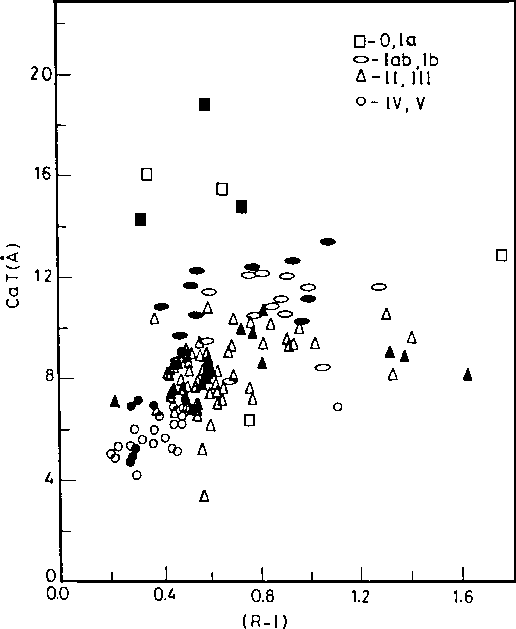
Figure 4: CaT (sum of the EQWs of the 3 lines) versus (R-I).  ,
,
 ,
,
 ,
,  represent superluminous supergiants, supergiants,
bright
represent superluminous supergiants, supergiants,
bright  , subgiants+dwarfs respectively. The filled
symbols belong to stars with
, subgiants+dwarfs respectively. The filled
symbols belong to stars with  whereas the unfilled
ones to those with
whereas the unfilled
ones to those with  .
The same symbols hold for
the subsequent figures
.
The same symbols hold for
the subsequent figures
The detailed non-LTE calculations of the Ca II triplet equivalent widths
carried out by JCJ over a broad range of input parameters, i.e.,  between 0.0 and 4.0,
  from 4000 K to 6600 K and Ca abundance
between +0.2 and -1.0 show that calcium is predominantly singly ionized in
the line forming region in the entire parameter space covered. This explains
the lack of sensitivity of Ca II EQW to temperature for stars under
consideration. For cooler stars however, there is more and more of neutral
calcium; Ca II is no longer the dominant ionization species and that
explains the decrease of Ca II EQW with temperature. JCJ's computations show
that the response of the Ca II EQW to
from 4000 K to 6600 K and Ca abundance
between +0.2 and -1.0 show that calcium is predominantly singly ionized in
the line forming region in the entire parameter space covered. This explains
the lack of sensitivity of Ca II EQW to temperature for stars under
consideration. For cooler stars however, there is more and more of neutral
calcium; Ca II is no longer the dominant ionization species and that
explains the decrease of Ca II EQW with temperature. JCJ's computations show
that the response of the Ca II EQW to  is different for
different values of
is different for
different values of  . For large values of g, the EQW decreases
monotonically with temperature; for lower
. For large values of g, the EQW decreases
monotonically with temperature; for lower  , there is a clear convex
shape. The present observations display a similar behaviour - there is a
trend of EQW increasing when
, there is a clear convex
shape. The present observations display a similar behaviour - there is a
trend of EQW increasing when  decreases for dwarfs and there is
a mild suggestion of convex appearance in the case of giants and
supergiants. JCJ emphasize that, if models of only a limited temperature
range are available, one would conclude on a single-valued dependence of EQW
on gravity, independent of temperature. Figure 4 (click here) also shows the
importance of considering a large span in temperature; without this only
the gravity effect will show up.
decreases for dwarfs and there is
a mild suggestion of convex appearance in the case of giants and
supergiants. JCJ emphasize that, if models of only a limited temperature
range are available, one would conclude on a single-valued dependence of EQW
on gravity, independent of temperature. Figure 4 (click here) also shows the
importance of considering a large span in temperature; without this only
the gravity effect will show up.
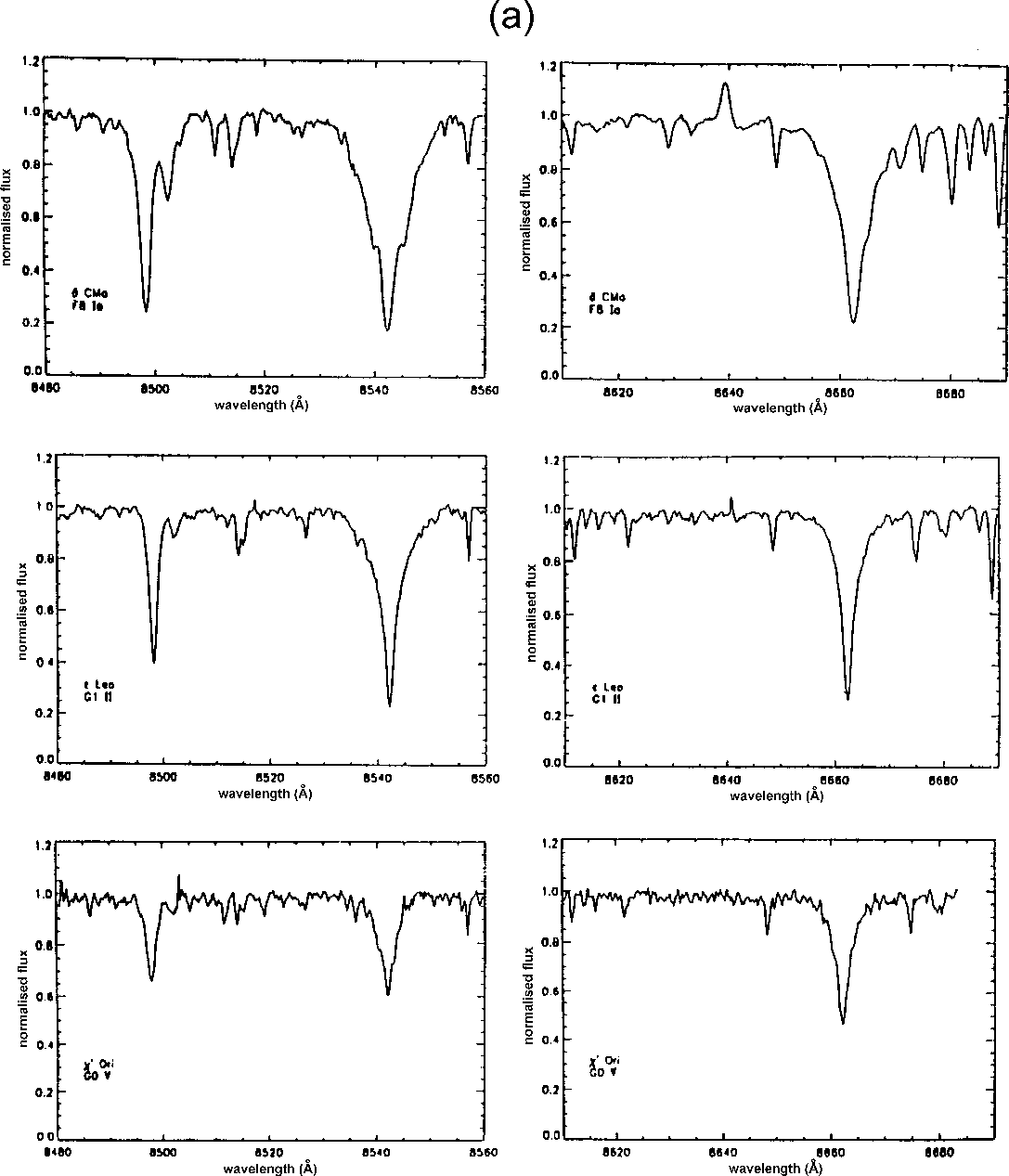
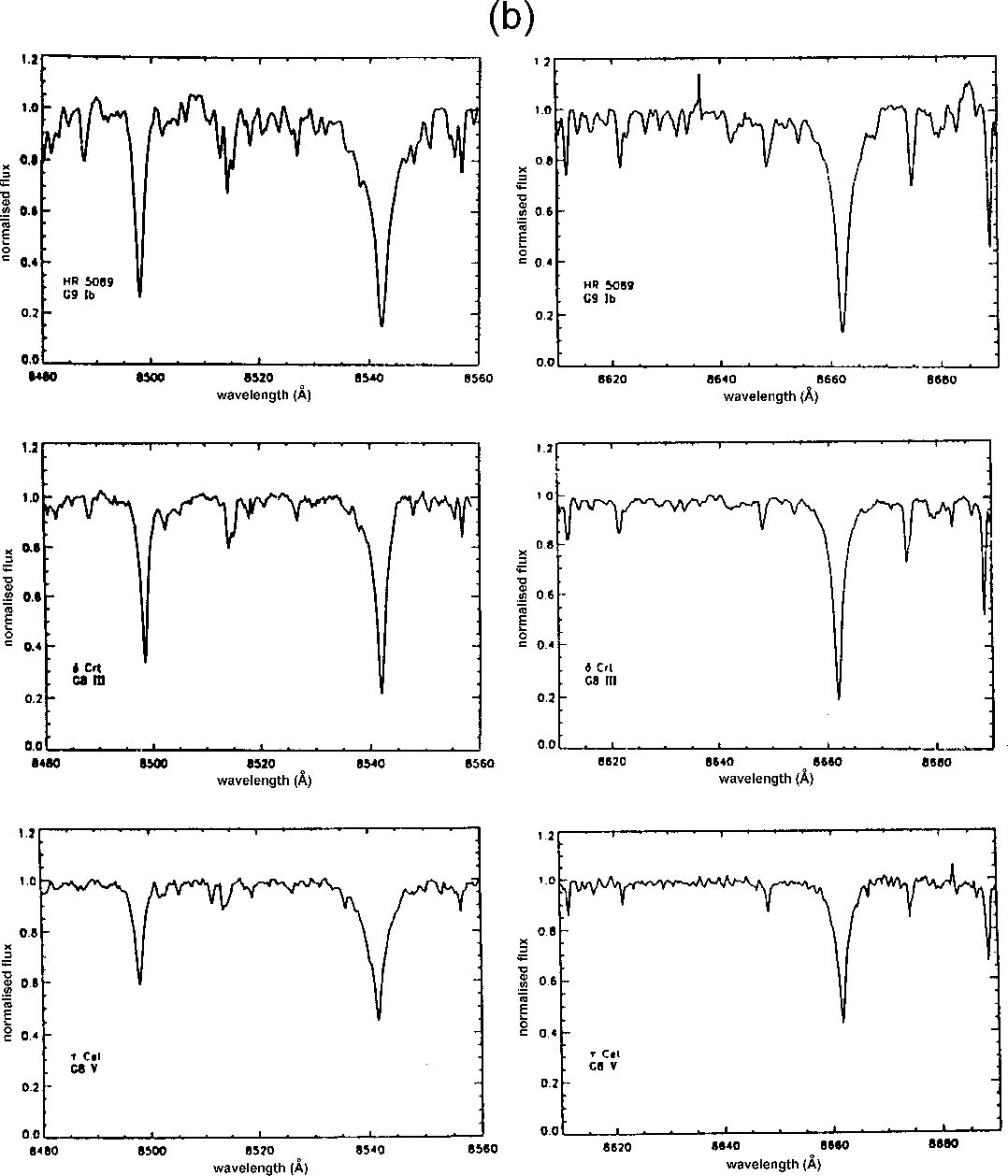
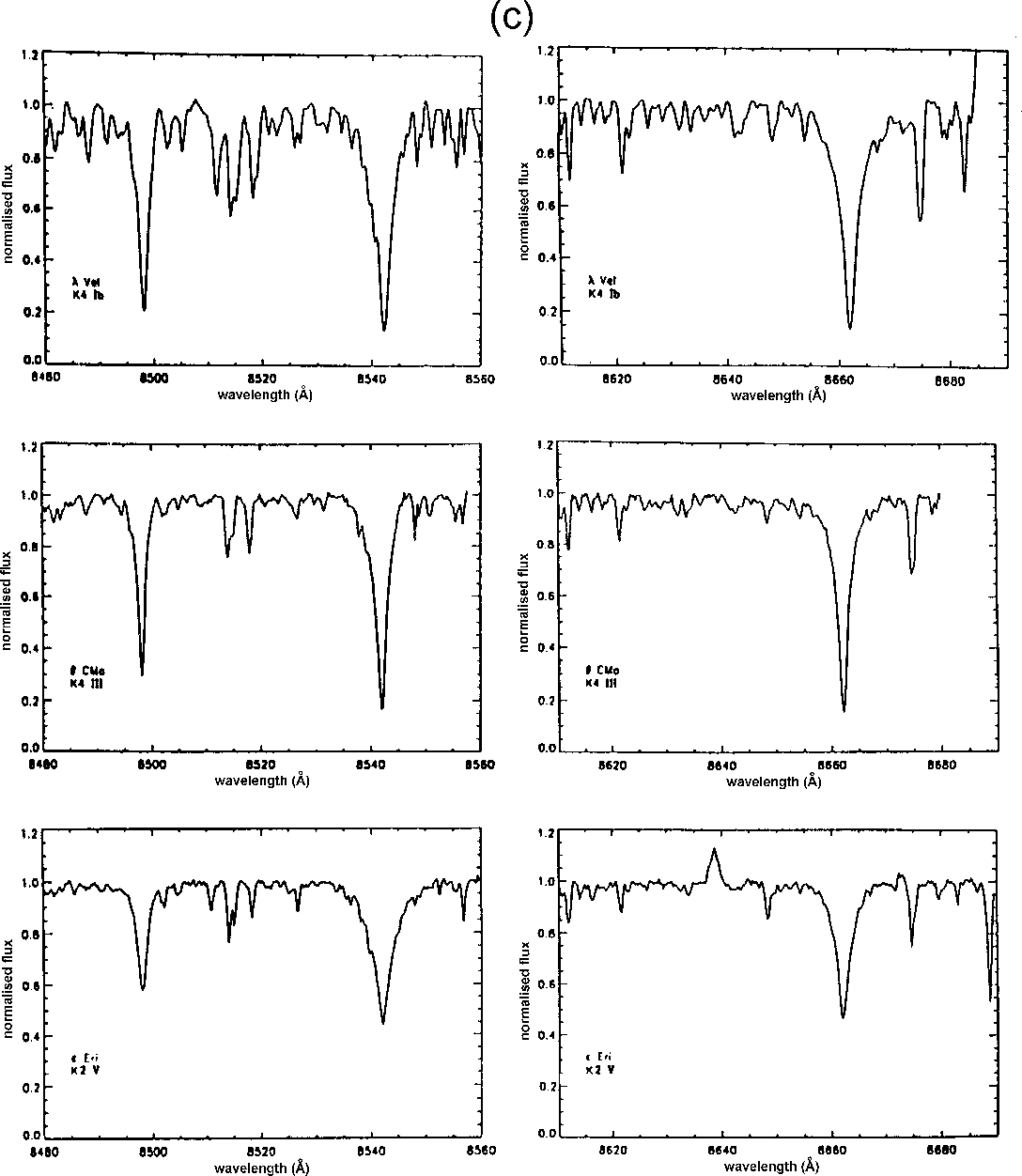
Figure 5: Sample normalised spectra around Ca II  , 8542, 8662
for stars of each spectral type over a range of luminosities: a)
F8-G1, b) G8-G9, c) K2-K4
, 8542, 8662
for stars of each spectral type over a range of luminosities: a)
F8-G1, b) G8-G9, c) K2-K4
In Figs. 5 (click here)a-c are displayed representative spectra in
 8498, 8542 and
  8662 for stars over the entire range
of luminosities, of roughly the same spectral type and metallicity (within
8662 for stars over the entire range
of luminosities, of roughly the same spectral type and metallicity (within
 [Fe/H] =
  0.2). The 3 different sets of spectra a to c are for 3
different spectral types, namely, F8-G0, G8-G9 and K2-K4.
These spectra clearly reveal a strong correlation between the Ca II triplet
strengths and the luminosity. The lines are strong, wide and deep in supergiants
and much weaker in dwarfs. Such a strong dependence on luminosity holds true for all spectral types, independent of [Fe/H].
One would, however, notice that the dependence of CaT on luminosity is not as striking
in metal poor stars (see Fig. 5 (click here)b) as in the stars of solar
metallicity (Fig. 5 (click here)a) or in more metal rich stars (as shown in
Fig. 5 (click here)c). Figure 5 (click here)a also includes a superluminous
supergiant
0.2). The 3 different sets of spectra a to c are for 3
different spectral types, namely, F8-G0, G8-G9 and K2-K4.
These spectra clearly reveal a strong correlation between the Ca II triplet
strengths and the luminosity. The lines are strong, wide and deep in supergiants
and much weaker in dwarfs. Such a strong dependence on luminosity holds true for all spectral types, independent of [Fe/H].
One would, however, notice that the dependence of CaT on luminosity is not as striking
in metal poor stars (see Fig. 5 (click here)b) as in the stars of solar
metallicity (Fig. 5 (click here)a) or in more metal rich stars (as shown in
Fig. 5 (click here)c). Figure 5 (click here)a also includes a superluminous
supergiant  CMa which shows unusually strong and wide asymmetric Ca
II triplet absorption features combined with emission, which suggests a
complex velocity structure in the atmosphere of such stars.
CMa which shows unusually strong and wide asymmetric Ca
II triplet absorption features combined with emission, which suggests a
complex velocity structure in the atmosphere of such stars.
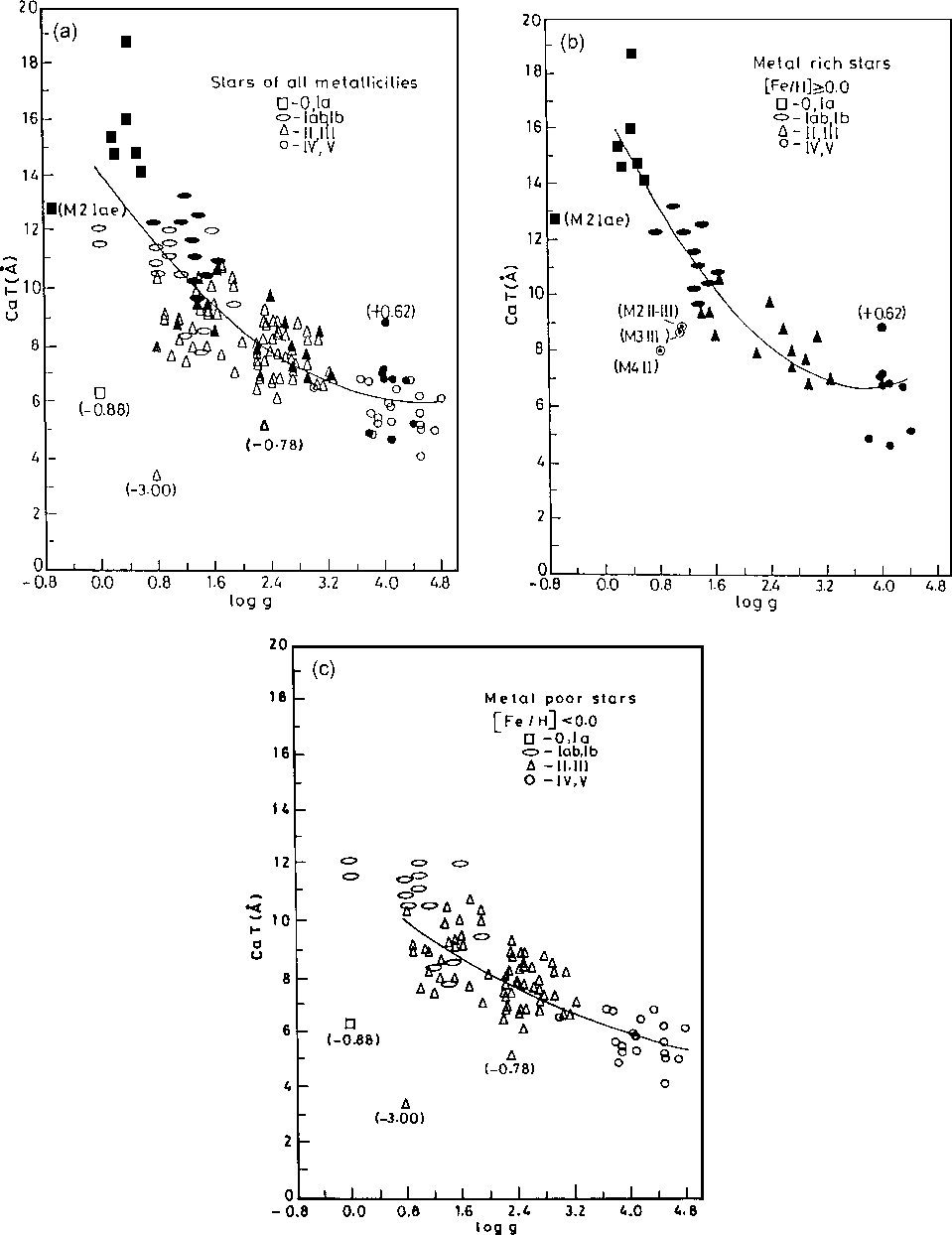
Figure 6: CaT versus  : a) for the whole star sample, b)
for metal rich stars (
: a) for the whole star sample, b)
for metal rich stars ( ), c) for metal poor stars
(
), c) for metal poor stars
( ) The smooth curve drawn is a second order polynomial fit
to the data points
) The smooth curve drawn is a second order polynomial fit
to the data points
Figure 6 (click here)a shows the plot of CaT against  for the whole
sample. The plot includes eight hypergiants marked by squares and many more
dwarfs and subgiants. More importantly, the data now include many more metal
poor stars and stars over a much larger range of [Fe/H]. The Ca II EQWs
obviously anticorrelate very strongly with
for the whole
sample. The plot includes eight hypergiants marked by squares and many more
dwarfs and subgiants. More importantly, the data now include many more metal
poor stars and stars over a much larger range of [Fe/H]. The Ca II EQWs
obviously anticorrelate very strongly with  . This is analytically
well understood that the ionized calcium lines (being the most abundant
ionization species in the domain considered here) strengthen in response to
an increase in electron density for stars where
. This is analytically
well understood that the ionized calcium lines (being the most abundant
ionization species in the domain considered here) strengthen in response to
an increase in electron density for stars where  dominates the
continuous opacity. The increase in the EQW is not due to an increase in
the line absorption coefficient; instead it is due to a decrease in the
continuous absorption coefficient. The relationship is not linear. The EQW
decreases rapidly with increasing
dominates the
continuous opacity. The increase in the EQW is not due to an increase in
the line absorption coefficient; instead it is due to a decrease in the
continuous absorption coefficient. The relationship is not linear. The EQW
decreases rapidly with increasing  for supergiants and giants;
whereas the relation is flatter for subgiants and dwarfs. In other words,
there is a very strong increase in EQW (from 8.0 Å to 16.0 Å ) for
small
for supergiants and giants;
whereas the relation is flatter for subgiants and dwarfs. In other words,
there is a very strong increase in EQW (from 8.0 Å to 16.0 Å ) for
small  's (from 2.0 to 0.0) and a milder increase from 4.0 Å to
8.0 Å for higher
's (from 2.0 to 0.0) and a milder increase from 4.0 Å to
8.0 Å for higher  's (from 4.5 to 2.0). The strong
increase in EQW for small
's (from 4.5 to 2.0). The strong
increase in EQW for small  values compared to the modest increase
for higher
values compared to the modest increase
for higher  values agrees very well with the theoretical
computations of JCJ. JCJ have calculated the equivalent width W (sum of
EQWs of
values agrees very well with the theoretical
computations of JCJ. JCJ have calculated the equivalent width W (sum of
EQWs of  8542 and
  8662) as a function of
  for
several metallicities and have in each case found that the relationship
between W and
for
several metallicities and have in each case found that the relationship
between W and  represents a least squares, second order fit in the
variable g over the large parameter space considered by them. The
observational data in the past have not led to a second order term in the
fit because of the sparse observations for high luminosities. As emphasised
by JCJ, it is important to represent the high luminosity stars well for
fitting to integrated spectra of external galaxies since they often
contribute a large fraction of the integrated light. A linear fit to EQW
obtained from the most common nearby stars, i.e., dwarfs, if used to
calibrate the integrated spectrum of an external galaxy would lead to an
underestimate of the ratio of dwarfs to giants in the galaxy. The present
observations however, include other than those of a large number of Ib
supergiants, also of 8 superluminous supergiants (0-Ia) denoted by squares
in Fig. 6 (click here). Just these many are adequate to give a steep
relationship for low
represents a least squares, second order fit in the
variable g over the large parameter space considered by them. The
observational data in the past have not led to a second order term in the
fit because of the sparse observations for high luminosities. As emphasised
by JCJ, it is important to represent the high luminosity stars well for
fitting to integrated spectra of external galaxies since they often
contribute a large fraction of the integrated light. A linear fit to EQW
obtained from the most common nearby stars, i.e., dwarfs, if used to
calibrate the integrated spectrum of an external galaxy would lead to an
underestimate of the ratio of dwarfs to giants in the galaxy. The present
observations however, include other than those of a large number of Ib
supergiants, also of 8 superluminous supergiants (0-Ia) denoted by squares
in Fig. 6 (click here). Just these many are adequate to give a steep
relationship for low  's and a relationship over the entire parameter
space similar to the second order fit of JCJ. It has thus been crucial to
add the observational data of the luminous supergiants. The dark smooth
curve drawn on each of the Figs. 6 (click here)a, b and c is a second order
polynomial fit to the data points. Data points that deviate by large amounts
from the correlation pattern were excluded in obtaining these fits.
Figure 6 (click here)a shows that the luminous supergiants perhaps require a
steeper fit. The theoretical computations of Erdelyi-Mendes & Barbuy
(1991) also predict a non-linear response. JCJ have tabulated
non-LTE values of W for
's and a relationship over the entire parameter
space similar to the second order fit of JCJ. It has thus been crucial to
add the observational data of the luminous supergiants. The dark smooth
curve drawn on each of the Figs. 6 (click here)a, b and c is a second order
polynomial fit to the data points. Data points that deviate by large amounts
from the correlation pattern were excluded in obtaining these fits.
Figure 6 (click here)a shows that the luminous supergiants perhaps require a
steeper fit. The theoretical computations of Erdelyi-Mendes & Barbuy
(1991) also predict a non-linear response. JCJ have tabulated
non-LTE values of W for  , 1.0, 2.0, 3.0, 4.0 and
  , 5000 K, 6000 K, 6600 K and metallicities of +0.2, 0.0, -0.5 and
-1.0. We have compared the observed values of W given in Table 2 of all
our program stars with the theoretical W for the closest possible match of
the parameters and find that the two measures match rather very well. The
theoretical W tends to be slightly higher than the observational values
probably because JCJ in their calculations of the EQWs of
, 5000 K, 6000 K, 6600 K and metallicities of +0.2, 0.0, -0.5 and
-1.0. We have compared the observed values of W given in Table 2 of all
our program stars with the theoretical W for the closest possible match of
the parameters and find that the two measures match rather very well. The
theoretical W tends to be slightly higher than the observational values
probably because JCJ in their calculations of the EQWs of  8542 and
 8662 chose the boundaries in wavelength for the wings as defined in
the work of DTT (from
8662 chose the boundaries in wavelength for the wings as defined in
the work of DTT (from  8527 to
  8557 and
  8647 to
 8667 respectively) to enable direct comparison with DDT's
observations. The boundaries chosen in our EQW measurements are smaller as has been elucidated earlier.
8667 respectively) to enable direct comparison with DDT's
observations. The boundaries chosen in our EQW measurements are smaller as has been elucidated earlier.
The large scatter in the plot is partly due to the varying distribution of
metal content in stars. JAJ have shown that the deviations of the observed
points from the above relationship are related to metallicity. This effect
is seen in the Fig. 6 (click here)a for stars marked by their [Fe/H].
In Figs. 6 (click here)b and c, CaT has been plotted against the subsamples of
metal rich stars (defined by  ) and of metal poor stars
(
) and of metal poor stars
( ) respectively. Evidently, a much tighter relation
between CaT and
) respectively. Evidently, a much tighter relation
between CaT and  exists for metal rich stars as found in the
observational study by JAJ and DTT. The
theoretical calculations of JCJ also show that the relative dependence of EQW
on
exists for metal rich stars as found in the
observational study by JAJ and DTT. The
theoretical calculations of JCJ also show that the relative dependence of EQW
on  is highest for high metallicity systems. For high metallicity
the change in EQW inside their computed range of
is highest for high metallicity systems. For high metallicity
the change in EQW inside their computed range of  is much
smaller than the changes obtained by varying
is much
smaller than the changes obtained by varying  from 4 to 0. This
makes the EQW-
from 4 to 0. This
makes the EQW- relation a useful one in the study of integrated
spectra and population synthesis of high-metallicity stellar systems.
relation a useful one in the study of integrated
spectra and population synthesis of high-metallicity stellar systems.
[Fe/H] is known for only 4 out of the 8 hypergiants observed. 3 of them have
 and the other one is metal poor. Being superluminous and
hence massive, most of them must be young. Therefore, we have assumed
and the other one is metal poor. Being superluminous and
hence massive, most of them must be young. Therefore, we have assumed
 for the remaining 4 hypergiants and plotted them
accordingly on the plot for the sample of metal rich stars
(Fig. 6 (click here)b). 4 out of the 5 stars that show large deviation from the
strong correlation are all M stars as marked on the figure. Because of the
strong TiO bands appearing in their spectrum and hence uncertainties in the
continuum location, their EQWs are suspected to have been underestimated.
Leaving these aside, the data for the metal rich stars clearly display a
very steep non-linear response. The metal poor stars as seen in
Fig. 6 (click here)c, do not follow such a close relationship; it is non-linear
although is not as steep. The stars that deviate by large amounts are
especially metal poor. DTT found a very poor dependence of the Ca II EQW on
for the remaining 4 hypergiants and plotted them
accordingly on the plot for the sample of metal rich stars
(Fig. 6 (click here)b). 4 out of the 5 stars that show large deviation from the
strong correlation are all M stars as marked on the figure. Because of the
strong TiO bands appearing in their spectrum and hence uncertainties in the
continuum location, their EQWs are suspected to have been underestimated.
Leaving these aside, the data for the metal rich stars clearly display a
very steep non-linear response. The metal poor stars as seen in
Fig. 6 (click here)c, do not follow such a close relationship; it is non-linear
although is not as steep. The stars that deviate by large amounts are
especially metal poor. DTT found a very poor dependence of the Ca II EQW on
 for metal poor stars and suggested that since the Ca II lines are
easily measurable even in stars with very low metal content, they could be
used as a metallicity indicator for metal poor stellar systems. JCJ's
computations also give a similar picture for stars of lower metallicity. On
the other hand, the close-knit relationship between the CaT strengths and
for metal poor stars and suggested that since the Ca II lines are
easily measurable even in stars with very low metal content, they could be
used as a metallicity indicator for metal poor stellar systems. JCJ's
computations also give a similar picture for stars of lower metallicity. On
the other hand, the close-knit relationship between the CaT strengths and
 for metal rich stars could be used to determine the luminosity of
stellar systems of metallicity above solar values from the observed Ca II
triplet strengths once a good calibration is established.
for metal rich stars could be used to determine the luminosity of
stellar systems of metallicity above solar values from the observed Ca II
triplet strengths once a good calibration is established.
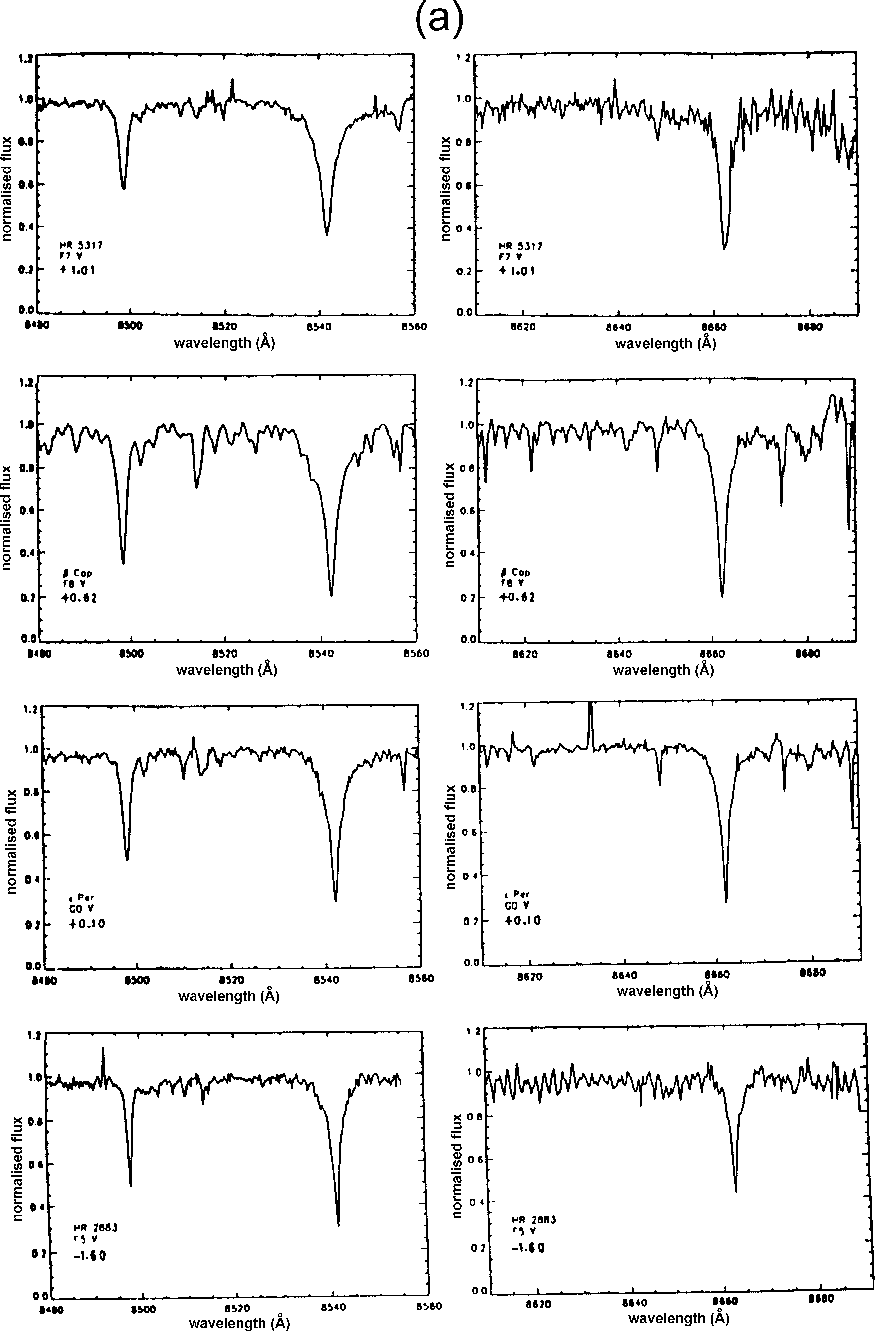
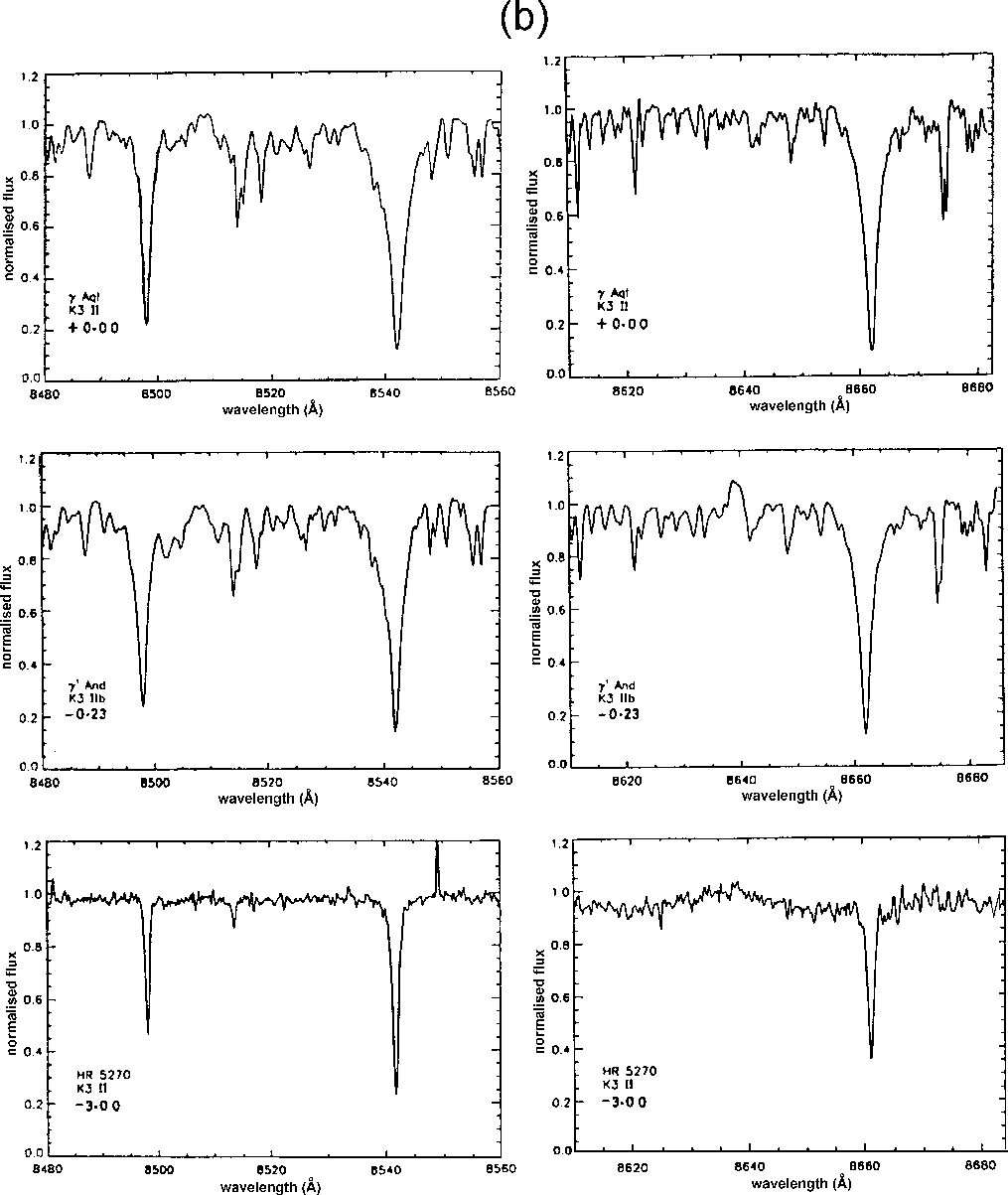
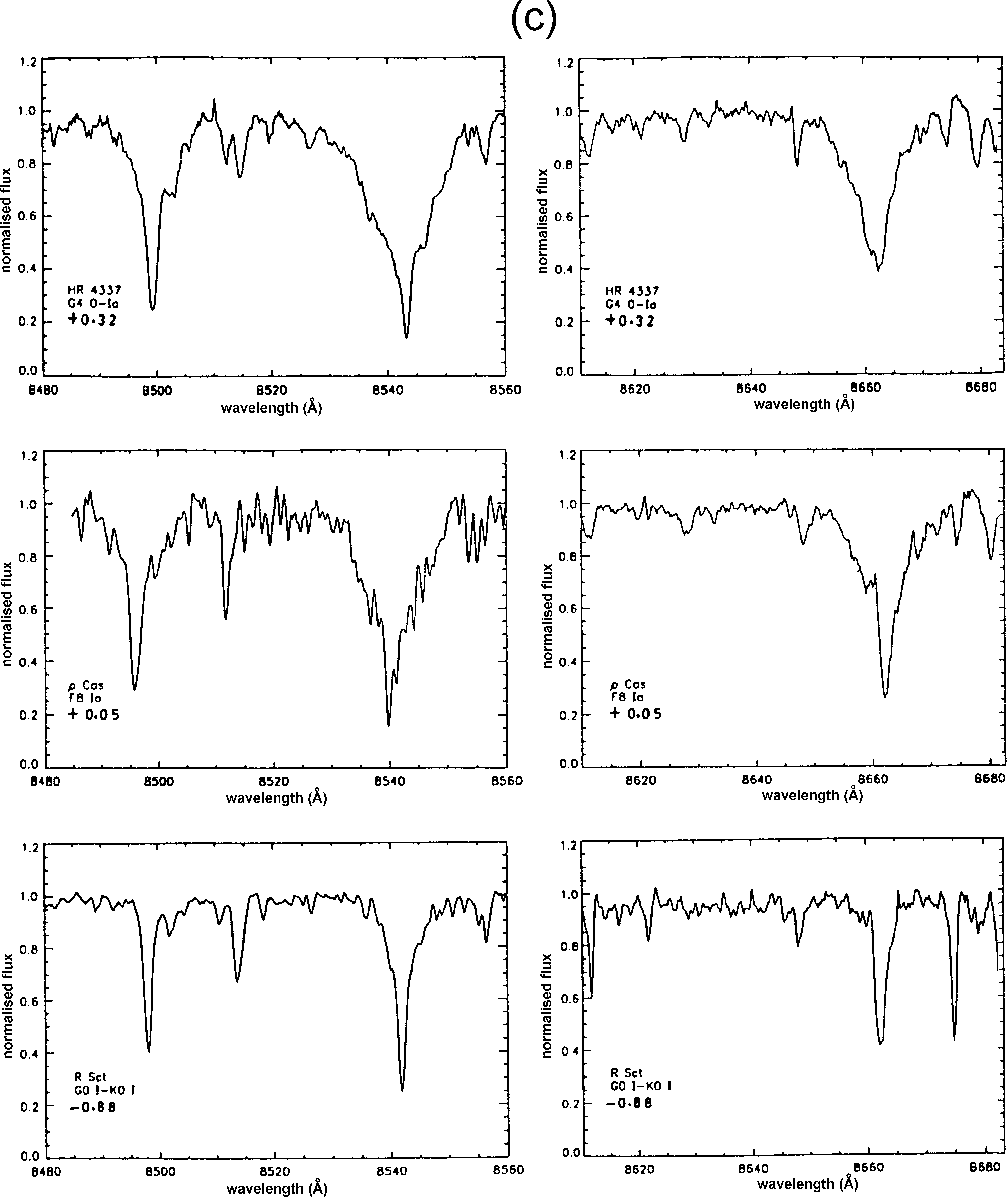
Figure 7: Representative normalised spectra around the  , 8542,
8662 lines for stars of a given luminosity and spectral type (or within a
very small range of that spectral type) over a range of metallicity:
a) V, F5-G0; b) II, K3; c)
0-Ia, F8-G4. Spectrum of each star is denoted by the spectral type and
[Fe/H]
, 8542,
8662 lines for stars of a given luminosity and spectral type (or within a
very small range of that spectral type) over a range of metallicity:
a) V, F5-G0; b) II, K3; c)
0-Ia, F8-G4. Spectrum of each star is denoted by the spectral type and
[Fe/H]
Figures 7 (click here)a-c demonstrate for  8498, 8542 and
 8662 how their strengths relate to [Fe/H]. As stated earlier,
[Fe/H] directly reflects the abundance of heavy elements including calcium. Under this assumption, CaT can be considered
as a reliable measure of metallicity. The spectral type and [Fe/H] are specified for each
star on its spectrum. Each set of spectra describes a range of
metallicity as large as possible for a given luminosity and a given spectral type
(or within a very small range of that spectral type). Each such set of spectra
shows the variation of the Ca II triplet strengths with [Fe/H] in the sense that
the Ca II triplet lines are much stronger in metal rich stars than in metal poor ones.
Dwarfs are most likely to cover a larger range in [Fe/H] because of the spread in age
that exists among them; hence it is possible to study the metallicity effects
better in dwarfs. Figure 7 (click here)a does cover a wide range in [Fe/H].
Supergiants, being young
Population I objects, are mostly massive stars born out of the richer interstellar
medium and therefore are not expected to cover a variation in metallicity as large
as that covered by the dwarf sample.
Figure 7 (click here)c however, includes stars spanning a large enough range
in [Fe/H]. Also, Fig. 7 (click here)b for giants includes HR 5270 which has an
extremely low EQW in all the 3 lines, because its [Fe/H] is as low as
-3.0. In general, however, a close look at Fig. 7 (click here) reveals that
although the dwarfs cover a larger range in [Fe/H] than the supergiants, the
variation in the Ca II strengths is more prominent among the supergiants.
This will be more obvious in the plots in Figs. 8 (click here)a, b, c and d. It
is also apparent in Fig. 7 (click here) that the variation with respect to
metallicity is milder than with respect to luminosity.
8662 how their strengths relate to [Fe/H]. As stated earlier,
[Fe/H] directly reflects the abundance of heavy elements including calcium. Under this assumption, CaT can be considered
as a reliable measure of metallicity. The spectral type and [Fe/H] are specified for each
star on its spectrum. Each set of spectra describes a range of
metallicity as large as possible for a given luminosity and a given spectral type
(or within a very small range of that spectral type). Each such set of spectra
shows the variation of the Ca II triplet strengths with [Fe/H] in the sense that
the Ca II triplet lines are much stronger in metal rich stars than in metal poor ones.
Dwarfs are most likely to cover a larger range in [Fe/H] because of the spread in age
that exists among them; hence it is possible to study the metallicity effects
better in dwarfs. Figure 7 (click here)a does cover a wide range in [Fe/H].
Supergiants, being young
Population I objects, are mostly massive stars born out of the richer interstellar
medium and therefore are not expected to cover a variation in metallicity as large
as that covered by the dwarf sample.
Figure 7 (click here)c however, includes stars spanning a large enough range
in [Fe/H]. Also, Fig. 7 (click here)b for giants includes HR 5270 which has an
extremely low EQW in all the 3 lines, because its [Fe/H] is as low as
-3.0. In general, however, a close look at Fig. 7 (click here) reveals that
although the dwarfs cover a larger range in [Fe/H] than the supergiants, the
variation in the Ca II strengths is more prominent among the supergiants.
This will be more obvious in the plots in Figs. 8 (click here)a, b, c and d. It
is also apparent in Fig. 7 (click here) that the variation with respect to
metallicity is milder than with respect to luminosity.
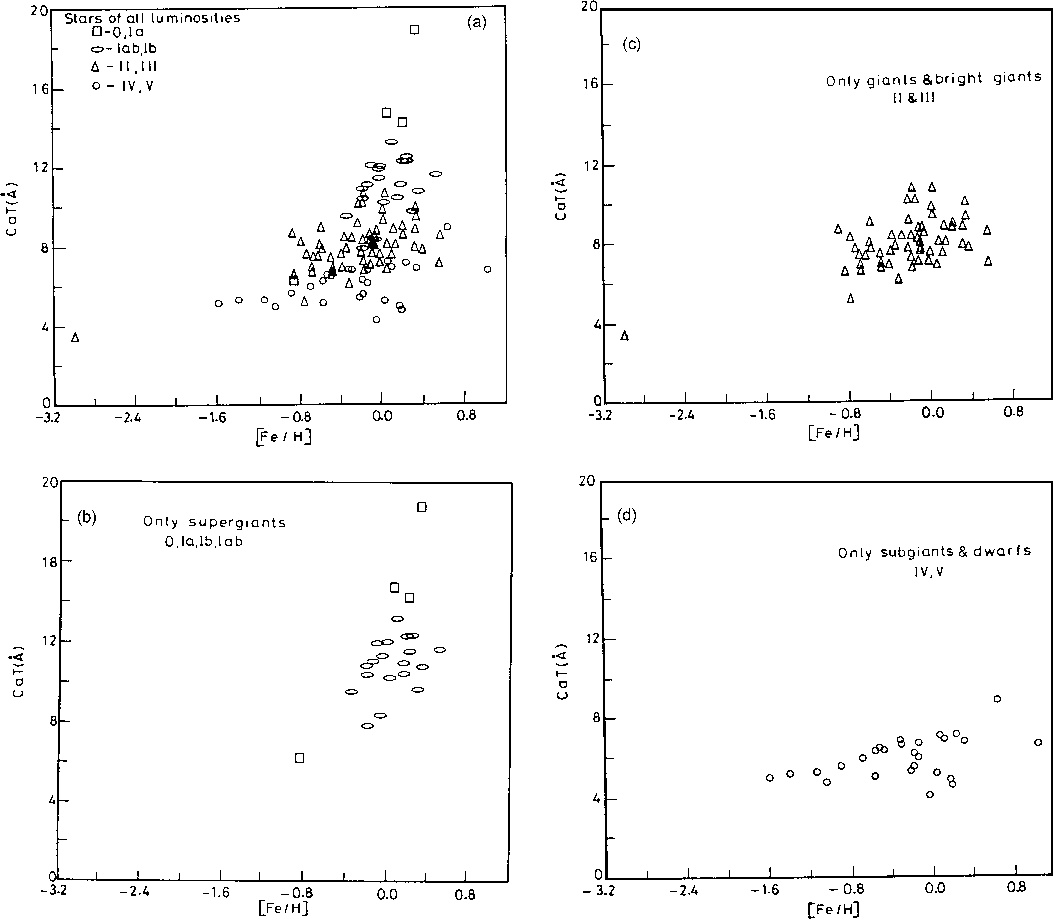
Figure 8: CaT versus [Fe/H] for: a) the whole sample, b)
supergiants, c) giants, d) dwarfs
A plot between CaT and [Fe/H] is shown in Fig. 8 (click here)a for the whole
sample of stars with known [Fe/H]. A large part of the scatter is due to the
luminosity effect; dwarfs are way down, separated from giants higher up and
supergiants still higher. If the star with [Fe/H] = -3.0 is included, the
spread in metallicity is over a factor of 10 000; otherwise it is still
over a factor of 400. The response of CaT to metallicity is not linear over
this metallicity range. Instead, CaT increases exponentially with [Fe/H].
This further corroborates that it is essential to have as wide a parameter
space as possible. Theoretical calculations of JCJ also predict a non-linear
response - a complex behaviour where the dependence of W on metallicity is
a strong function of  . Figures 8 (click here)b, c and d clearly
demonstrate an exactly similar behaviour. The
. Figures 8 (click here)b, c and d clearly
demonstrate an exactly similar behaviour. The  correlation
is much stronger for the supergiants than for the dwarfs. In the case of
supergiants, the dependence is sharp and steep, even over a limited range of
[Fe/H]. The EQWs differ by a factor of 2.5 over metallicity range from
-0.9 to +0.2, i.e., a factor of 12. The response is milder in the case
of giants and dwarfs. Over the same [Fe/H] range, EQWs differ by a factor of
1.5 in giants and even less in dwarfs. A factor of 2.5 only in EQW for
giants occurs over a metallicity factor as large as 1000. The metallicity
dependence is much stronger for supergiants although the covered range in metallicity is smaller.
correlation
is much stronger for the supergiants than for the dwarfs. In the case of
supergiants, the dependence is sharp and steep, even over a limited range of
[Fe/H]. The EQWs differ by a factor of 2.5 over metallicity range from
-0.9 to +0.2, i.e., a factor of 12. The response is milder in the case
of giants and dwarfs. Over the same [Fe/H] range, EQWs differ by a factor of
1.5 in giants and even less in dwarfs. A factor of 2.5 only in EQW for
giants occurs over a metallicity factor as large as 1000. The metallicity
dependence is much stronger for supergiants although the covered range in metallicity is smaller.