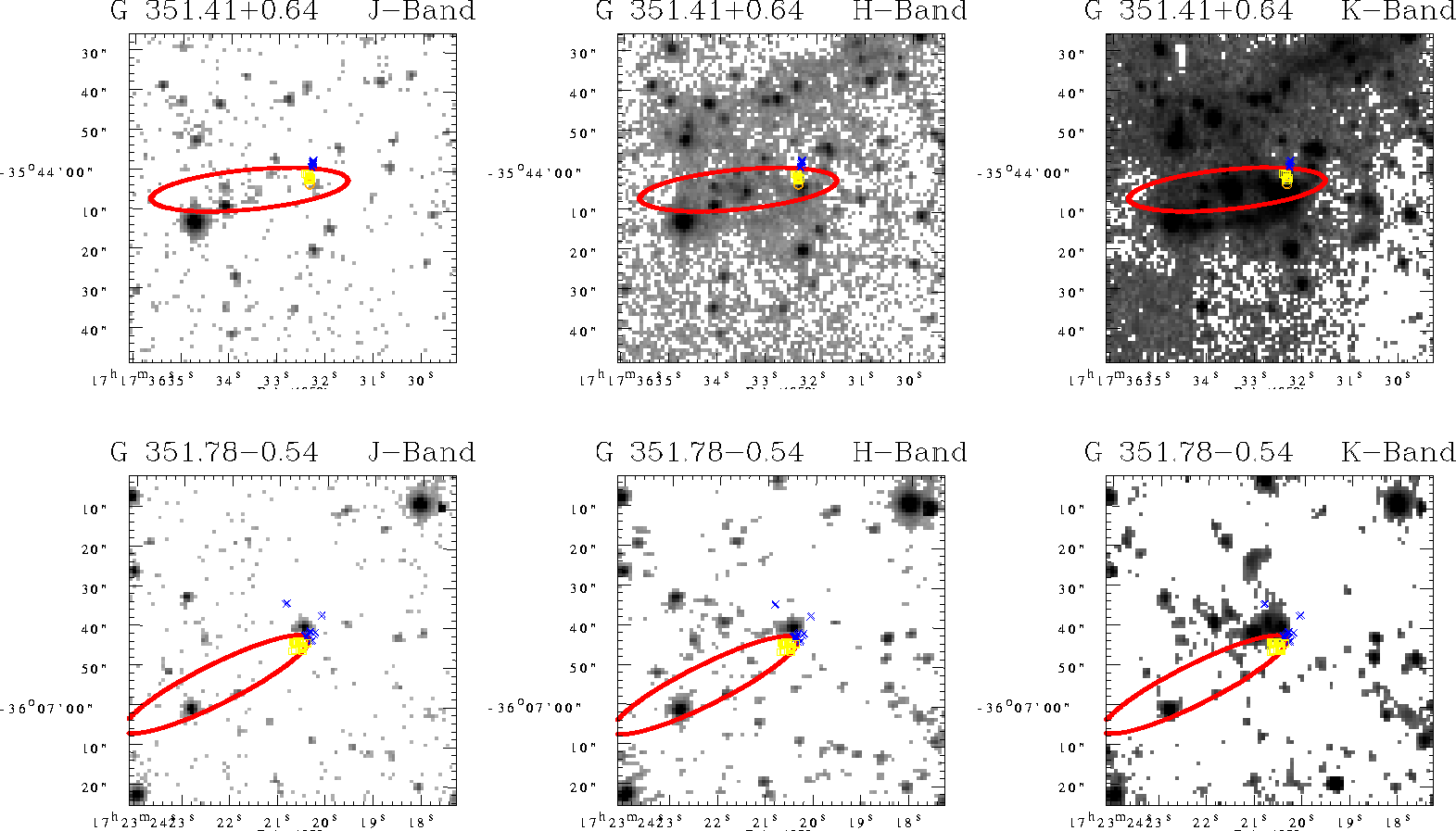
In Figs. 1 (click here)a-p the J, H and K images for all the observed
fields are presented. The fields are presented in the same order as in
Table 1 (click here). The greyscale display is logarithmic in all cases.
The crosses and the open squares represent the positions of the
H2O and OH maser spots detected by FC89.
The circles represent the peak positions of the UCHII regions, when detected
by FC89 (however, note that their continuum observations are not sensitive to
sources weaker than  mJy at 22 GHz). The large ellipse represents
the IRAS-PSC error box (note that due to an error in the plotting routine
the ellipse for G035.20-1.73 in Fig. 2 of Paper I was plotted west
of north instead of east of north).
For each NIR image the 1950 coordinate grid was derived from the astrometry.
mJy at 22 GHz). The large ellipse represents
the IRAS-PSC error box (note that due to an error in the plotting routine
the ellipse for G035.20-1.73 in Fig. 2 of Paper I was plotted west
of north instead of east of north).
For each NIR image the 1950 coordinate grid was derived from the astrometry.
Figure 1: a-p) J, H and K images of all the
observed regions. The greyscale is logarithmic in all cases, crosses and
open squares represent the H2O and OH maser spots detected by FC89,
respectively. Open circles mark the position of the radio continuum peak
(where detected by FC89). The large ellipses represent the IRAS-PSC error
boxes. The coordinate grid, derived from the astrometry, are at 1950
(available in electronic form)

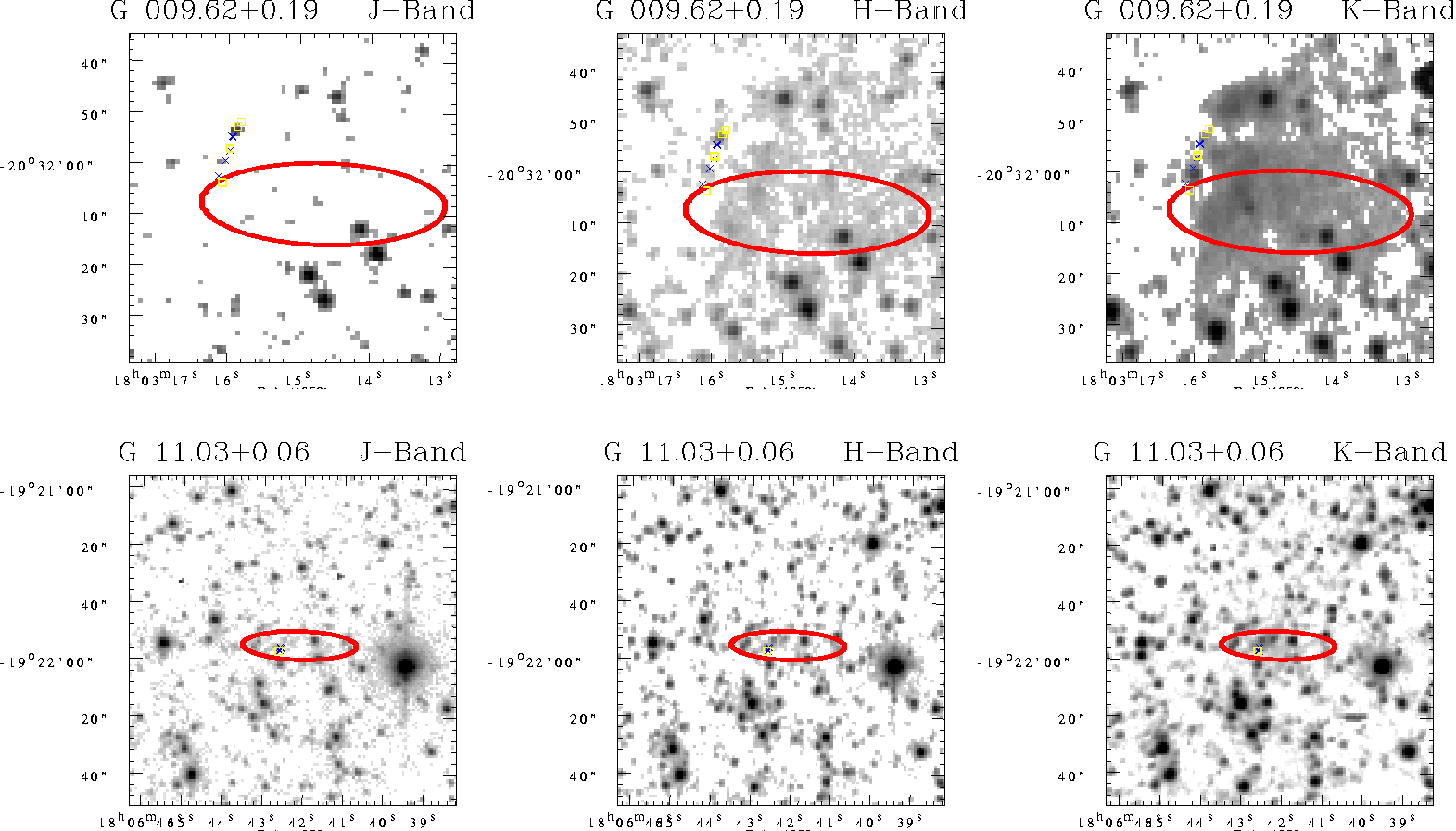
Figure 1: continued

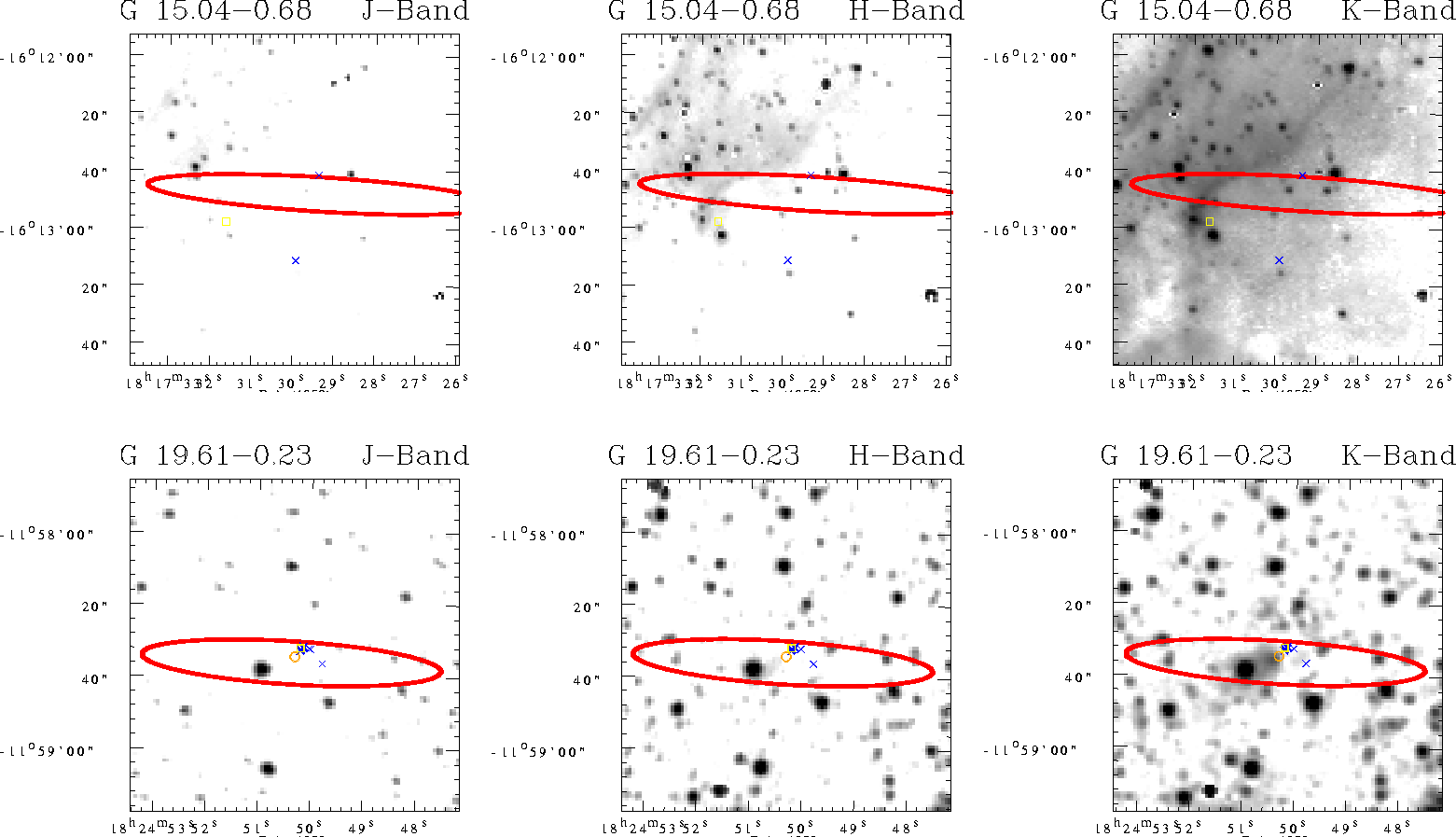
Figure 1: continued


Figure 1: continued
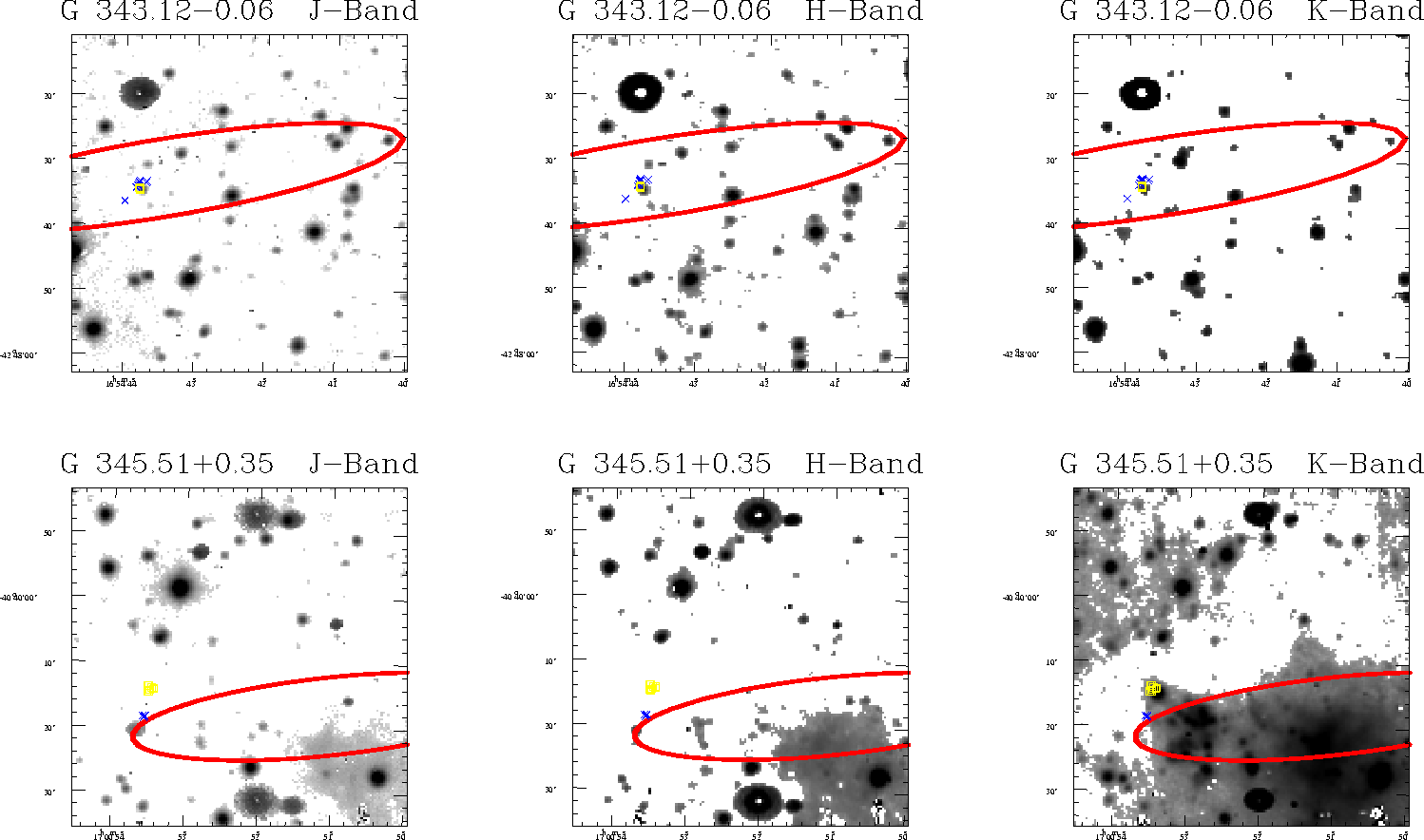
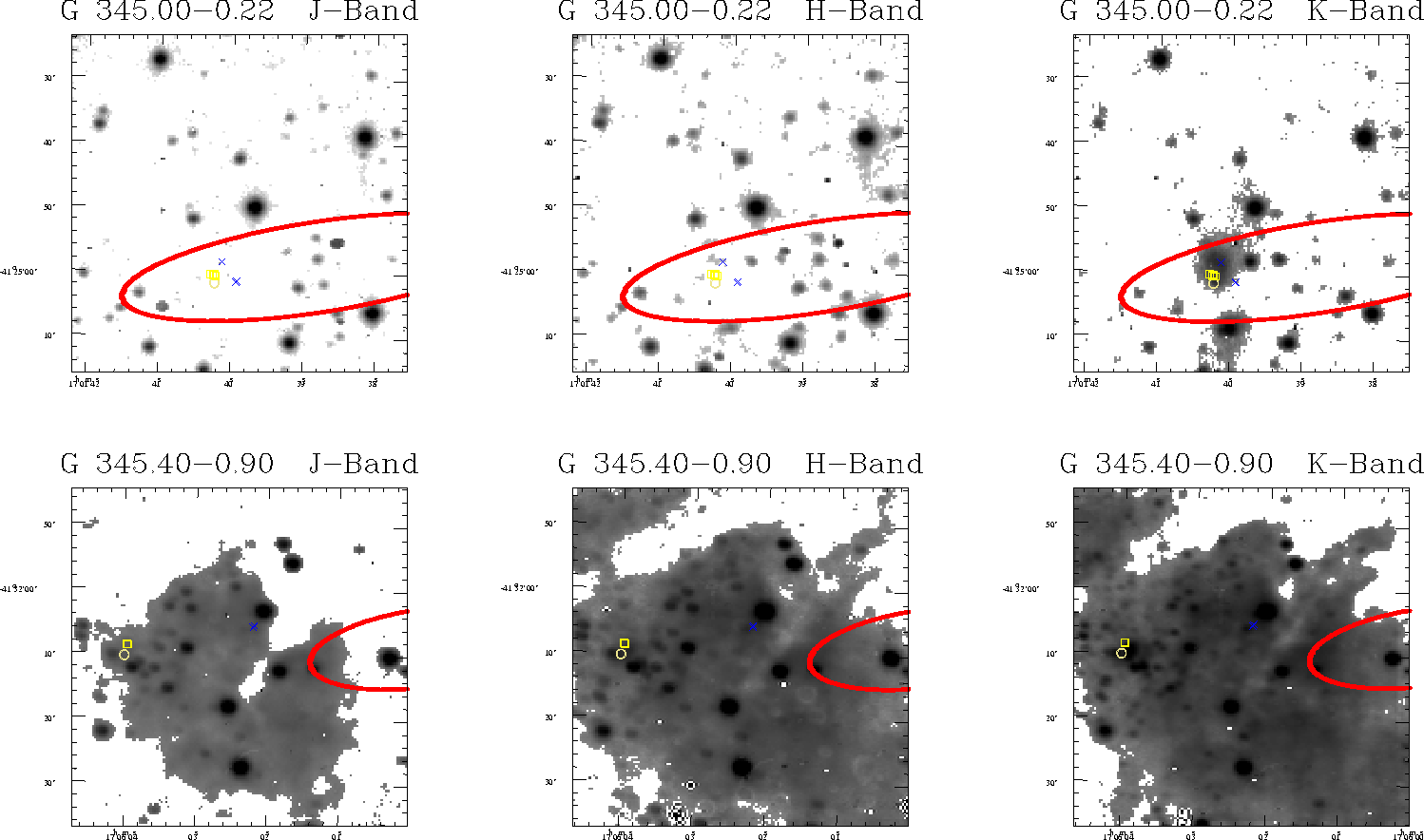
Figure 1: continued

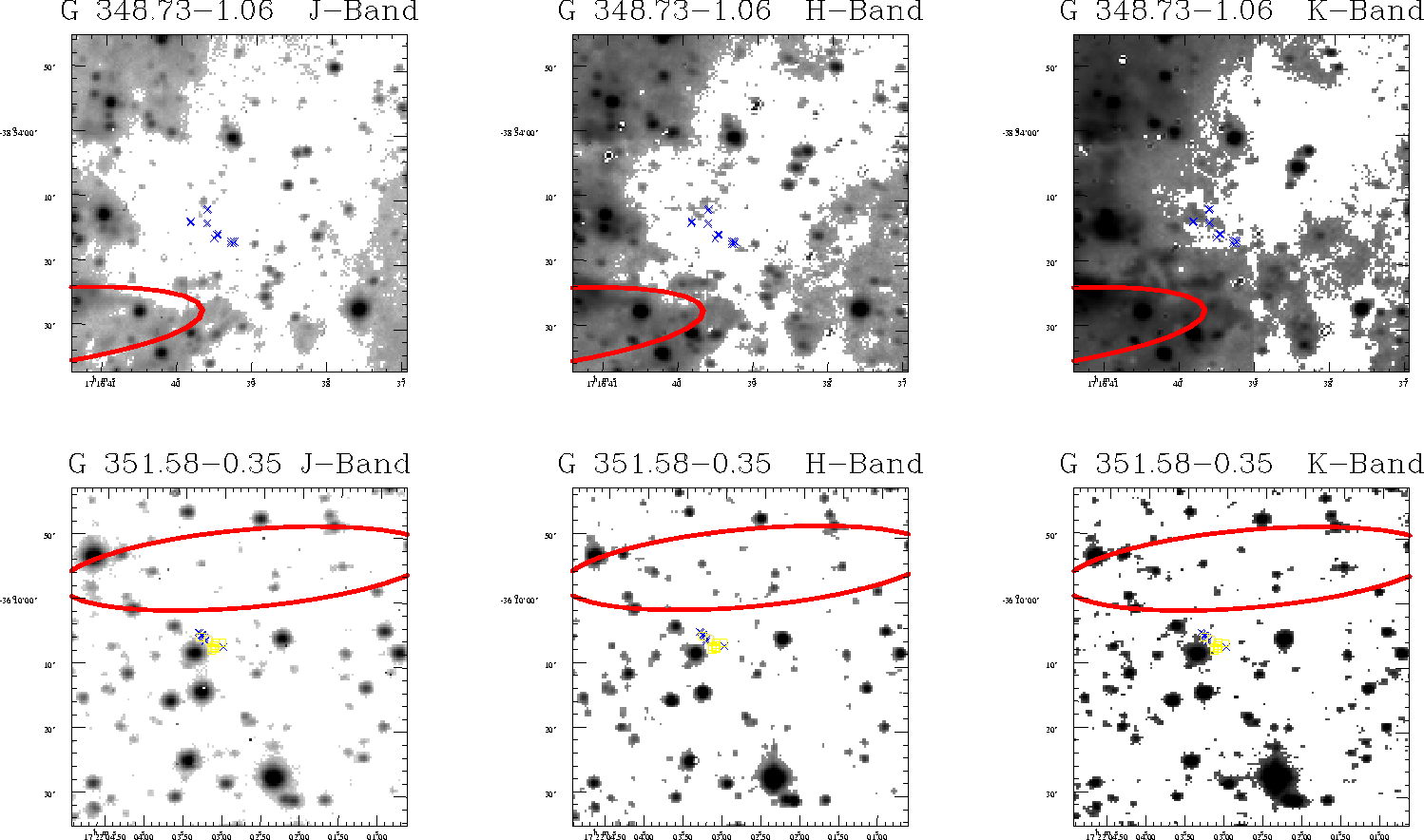
Figure 1: continued


Figure 1: continued

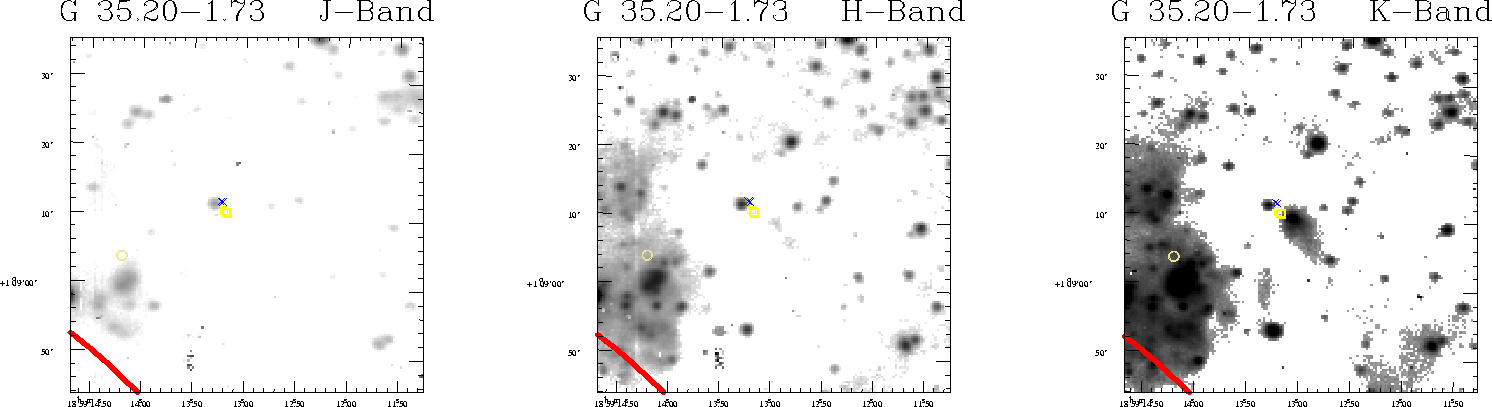
Figure 1: continued
Following the reasoning of Paper I, in order to compare the radio
data with the NIR images we have grouped the H2O and OH maser
spots detected by FC89 in each field into components of  size. In this way, in the 31 fields we find a total of 68 H2O\
and 40 OH maser components.
The components have been identified following the convention of Paper I.
size. In this way, in the 31 fields we find a total of 68 H2O\
and 40 OH maser components.
The components have been identified following the convention of Paper I.
The necessary (but not sufficient) requirement to establish a physical
association between a maser and a NIR source is close positional
coincidence.
For each maser we have searched for the closest source
in the K-band.
The NIR source was considered to be physically
associated with the maser component if closer
than  (see below). We decided to use the nearest neighbour
approach in the association in order to avoid any a priori bias on the
associated sources (see the discussion in Paper I).
(see below). We decided to use the nearest neighbour
approach in the association in order to avoid any a priori bias on the
associated sources (see the discussion in Paper I).
In Tables 2 (click here)a and 2 (click here)b the parameters are listed for the NIR sources associated with the maser components. For each NIR source we list an identifyer derived from the galactic coordinates (e.g. g35141-1 for the NIR source associated with the first maser component in G351.41+0.64), the 1950 coordinates, the magnitudes with errors in the J, H and K bands, the maser component with which it is associated, the separation between the maser component and the NIR source in arcseconds and in milliparsecs (i.e. projected on the plane of the sky using the distance reported by FC89). When a source is not detected in one or more wavebands the limiting magnitude is indicated and the lower limit is identified with a ">'' symbol. When a maser group was not coincident with any NIR sources, the NIR identifyer is marked with an "N'' and the limiting magnitudes in the three bands are given.
It is worth noting that all the maser components in the 1994 sample
have a NIR source within . This is primarly
due to the much higher sensitivity of the observations with respect to those
of the 1992 run and especially those presented in Paper I.
For this reason the possibility of spurious coincidence should be reconsidered
in view of the higher quality of the data available (see Sect. 4 (click here)).
Anticipating the results of the following section, we decided to retain as
good physical associations the coincidences
within and mark as dubious all the coincidences at larger
distances (marked with "D'' in Table 2 (click here)).
Extremely crowded regions in which the probability of spurious
coincidences is very high have been indicated in Table 2 (click here)b with a
"C'' in the last column.

Figure 2: Distribution of separations
between NIR sources and maser components. Continuous line:
H2O maser components; dotted line: OH masers components. On the left:
observed projected separation on the sky in arcsecond; on the right:
projected separation on the plane of the sky in milliparsecs. The distances
quoted in Table 1 (click here) have been used
For the following discussion
we will merge the data presented in this paper with that
of Paper I. Due to the better resolution and sensitivity, for the 5 sources
of Paper I that have been reobserved in June 1994 we will consider
only the observations presented here.
Consequently, the total number of SFRs is 43 and the numbers of H2O\
and OH masers are 82 and 53, respectively.
In Fig. 2 (click here) we show the distribution of the separations between
the first K-band neighbour
and the OH and H2O maser components, in arcseconds and
in physical separation projected on the plane of the sky (assuming the distance
quoted in Table 1 (click here)). Note that in the figure we have considered also
the association with  , to be consistent
with Paper I. In the following section we will discuss the reliability of
such associations.
, to be consistent
with Paper I. In the following section we will discuss the reliability of
such associations.
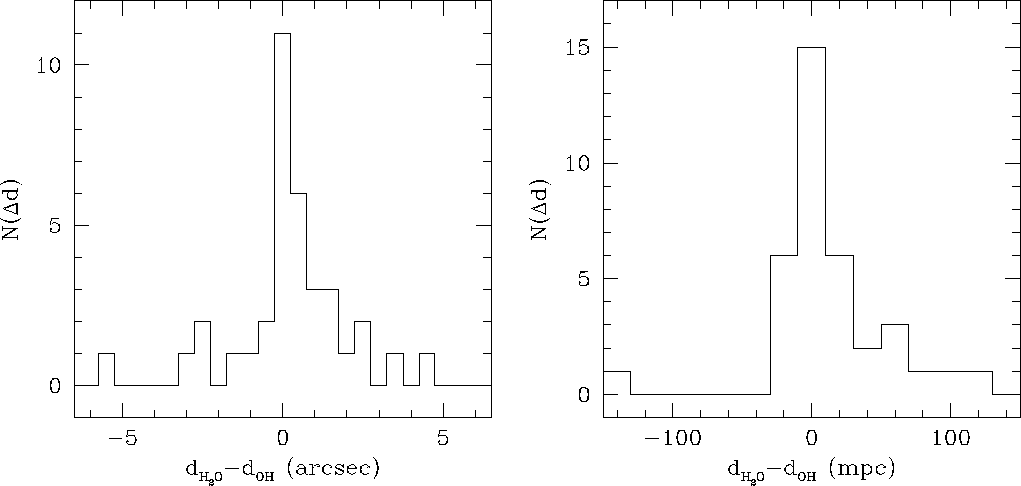
Figure 3: Distribution of the difference of
the separations between the NIR source and the H2O and OH maser components.
On the left: separation difference in
arcsecond; on the right: in milliparsecs
In Fig. 3 (click here) we show the difference in separation of the H2O and OH maser components associated with the same NIR source. The histogram is strongly peaked around zero and does not show any significant asymmetry, indicating that there does not seem to be any trend for one of the two maser types to form closer to the associated NIR source.
Five of the sources have been observed both in 1991 at the 1 m telescope with the NICMOS2-based camera (Paper I) and in 1994 at the 2.5 m telescope with the new detector (this paper).
In several cases (sources: g34500-1; g34501-1,2,3,4; g34541-1,2; g34551-1) the new higher resolution and higher sensitivity observations enabled detection of new sources (closer to the maser components than those reported in Paper I) fainter than the old detection limit or confused because they are embedded in diffuse nebulositities, which prevented a reliable detection in the lower resolution observations. In one case (g34500-2) the point-like source is surrounded by a diffuse halo (unresolved in the 1991 observations) and hence the integrated magnitude (that of Paper I) is 1 magnitude brighter than that reported in Table 2 (click here). The other two sources (g03520-1 and g34551-2) are in excellent agreement with that of Paper I, taking into account the photometric calibration uncertainties.
We thus conclude that in a few cases the new observations found a NIR source associated with the maser component where no sources were found in Paper I and in other cases the agreement between the two sets of observations is rather good. However, in some cases the source associated with the maser components in Paper I is not the closest to the maser when higher sensitivity data are considered. This fact implies that (especially for the associations with larger separation) the confusion due to unrelated background sources should be carefully considered.
| Name |  (1950) (1950) |  (1950) (1950) | mJ | mH | mK | Maser | d ( ) ) | d (mpc) | ||
| g34501-1 | 16:53:17.26 | -40:09:19.7 | >19.3 | >18.3 |  | H2O-A | 3.5 | 50.9 | ||
| g34501-2 | 16:53:18.91 | -40:09:28.3 | >19.3 | >18.3 |  | H2O-B | 1.8 | 26.2 | ||
| g34501-3 | 16:53:19.72 | -40:09:38.6 |  |  |  | H2O-C | 2.7 | 39.3 | ||
| g34501-4 | 16:53:19.63 | -40:09:45.7 | >19.3 | >18.3 |  | OH-A | 2.4 | 34.9 | ||
| OH-B | 1.1 | 16.0 | ||||||||
| OH-C | 0.2 | 2.9 | ||||||||
| g34313-1 | 16:54:43.79 | -42:47:35.0 |  |  |  | H2O-A | 1.6 | 24.8 | ||
| H2O-B | 1.3 | 20.2 | ||||||||
| H2O-C | 3.1 | 48.1 | ||||||||
| OH-A | 0.5 | 7.8 | ||||||||
| g34551-1 | 17:00:53.52 | -40:40:17.2 |  | >17.4 |  | H2O-A | 1.3 | 13.2 | ||
| g34551-2 | 17:00:53.42 | -40:40:14.8 | >19.0 | >17.4 |  | OH-A | 0.6 | 6.1 | ||
| g34500-1 | 17:01:39.74 | -41:24:58.4 | >19.5 |  |  | H2O-A | 3.9 | 60.5 | ||
| g34500-2 | 17:01:40.19 | -41:24:58.5 | >19.5 | >18.5 |  | H2O-B | 0.6 | 9.3 | ||
| OH-A | 2.2 | 34.1 | ||||||||
| g34541-1 | 17:06:02.28 | -41:32:06.5 |  |  |  | H2O-A | 1.2 | 13.4 | ||
| g34541-2 | 17:06:03.92 | -41:32:10.1 |  |  |  | OH-A | 0.9 | 10.0 | ||
| g34907-1 | 17:13:25.59 | -38:01:58.3 |  |  |  | H2O-A | 0.7 | 3.4 | C | |
| OH-A | 0.8 | 3.9 | C | |||||||
| g35002-1 | 17:14:22.17 | -37:00:02.6 |  |  |  | H2O-A | 0.8 | 19.4 | ||
| OH-A | 0.3 | 7.3 | ||||||||
| g34870-1 | 17:16:38.96 | -38:54:16.8 |  |  |  | H2O-A | 3.7 | 32.3 | ||
| g34870-2 | 17:16:39.76 | -38:54:12.8 |  |  |  | H2O-B | 4.2 | 36.7 | ||
| H2O-C | 2.0 | 17.5 | ||||||||
| H2O-D | 2.0 | 17.5 | ||||||||
| H2O-E | 1.2 | 10.5 | ||||||||
| g35158-1 | 17:22:02.81 | -36:10:06.3 | >19.0 | >17.2 |  | H2O-A | 2.5 | 120.0 | ||
| OH-A | 2.5 | 120.0 | ||||||||
| g35158-2 | 17:22:03.37 | -36:10:08.3 |  |  |  | H2O-B | 3.0 | 144.0 | ||
| OH-B | 3.2 | 153.6 | ||||||||
| OH-C | 2.8 | 134.4 | ||||||||
| g35252-1 | 17:23:50.80 | -35:17:02.0 |  |  |  | H2O-A | 1.3 | 50.4 | C | |
| OH-A | 0.7 | 27.1 | C | |||||||
| g35346-1 | 17:23:33.00 | -34:05:53.8 |  |  |  | H2O-A | 0.8 | 32.6 | ||
| OH-A | 0.6 | 24.4 | ||||||||
| g35461-1 | 17:27:00.29 | -33:11:37.3 | >19.0 | >17.2 |  | H2O-A | 3.9 | 79.4 | ||
| OH-A | 3.8 | 77.4 | ||||||||
| g35914-1 | 17:40:13.99 | -29:37:57.5 |  |  |  | H2O-A | 0.6 | 14.5 | C | |
| H2O-B | 1.8 | 43.6 | C | |||||||
| OH-A | 0.4 | 9.7 | C | |||||||
| g35997-1 | 17:44:09.18 | -29:10:57.3 |  |  |  | H2O-A | 0.7 | 33.9 | ||
| OH-A | 0.9 | 43.6 | ||||||||
| g00214-1 | 17:47:28.29 | -27:05:01.1 |  | >16.5 |  | H2O-A | 2.3 | 99.2 | ||
| OH-A | 2.0 | 86.3 | ||||||||
| g03520-1 | 18:59:13.06 | +01:09:11.2 | >19.6 | >17.6 |  | H2O-A | 1.0 | 14.1 | ||
| OH-A | 1.7 | 23.9 |